

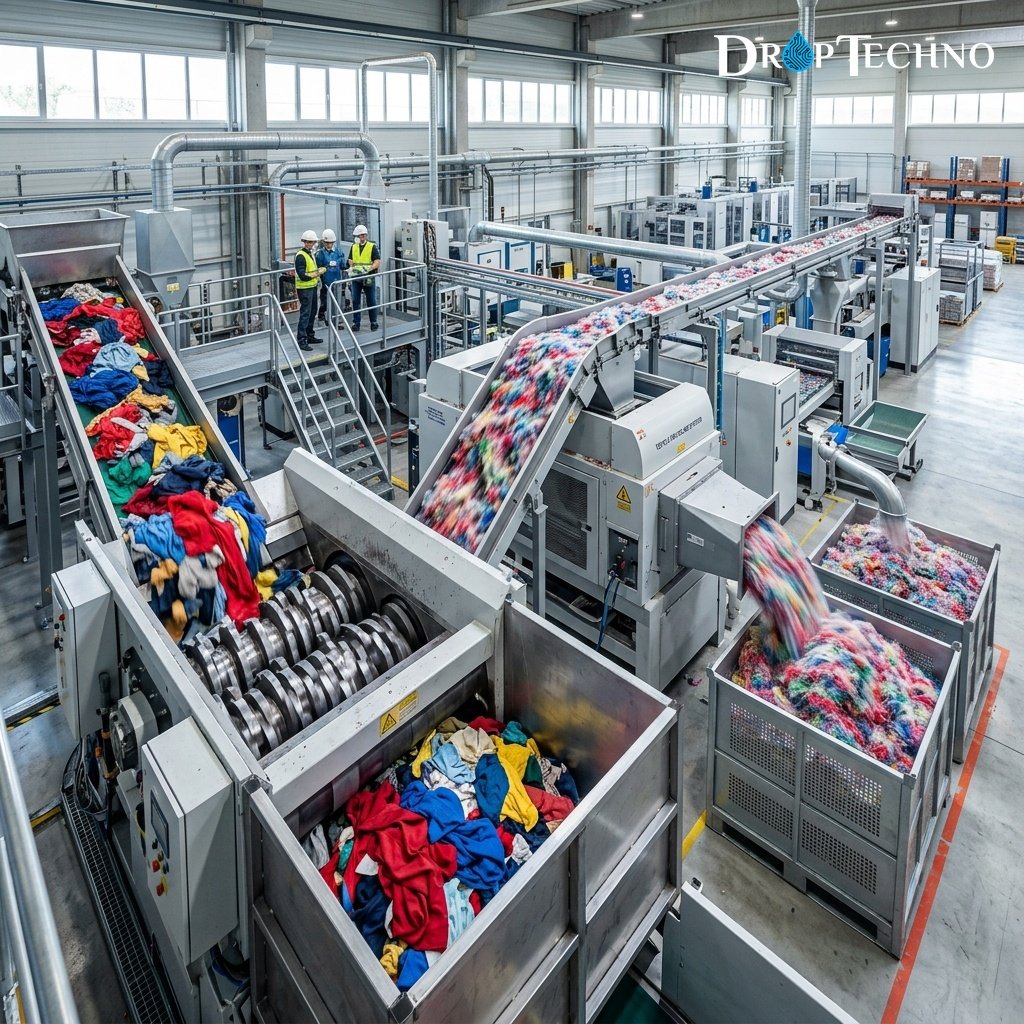
The global apparel and manufacturing sectors are undergoing a historic transition toward sustainable resource recovery. At the central core of this circular transformation is a specialized mechanical process known as a Reisserei.
Derived from the German verb reißen (meaning to tear), a Reisserei is an industrial manufacturing facility designed to mechanically break down fabric scraps, post-consumer garments, and raw wool into loose, high-quality fibers.
Rather than relying on harsh chemical solvents or dumping unwanted clothing into overflowing municipal landfills, modern facilities utilize high-performance mechanical tearing machines. Heavy-duty garnet rollers shred dense woven and knitted fabrics back into individual fiber components. The resulting material is then cleaned, respun into fresh yarn, or processed into nonwoven industrial products.
Understanding how industrial fiber tearing operates yields key insights into closed-loop textile production and sustainable supply chain management. In this detailed guide, we explore mechanical tearing mechanisms, essential processing steps, environmental benefits, and key industrial applications shaping green manufacturing worldwide.
Table of Contents
1. What Is a Reisserei in Industrial Textile Recycling?
A Reisserei serves as a specialized industrial manufacturing plant focused on the physical disassembly of textile waste. Unlike basic waste collection operations, these facilities extract valuable raw fibers from woven, knitted, and nonwoven structures without destroying the underlying polymer chains.
The historical roots of mechanical tearing trace back to traditional European wool processing regions. In those early textile mills, post-industrial fabric offcuts and worn garments were shredded into shoddy fibers for low-cost re-spinning. Today, modern industrial plants process both natural organic fibers and complex synthetic polymer blends.
The primary output of mechanical tearing is secondary raw fiber, often categorized as reclaimed or recycled fiber. These reclaimed materials supply essential raw feedstock for automotive acoustic panels, eco-friendly home insulation batts, geotextiles, and blended apparel yarn spinning mills.
Furthermore, state-of-the-art facilities utilize sophisticated air-lay and carding technology to align short recycled fibers. This ensures that even short-staple cotton and wool offcuts can be incorporated effectively into secondary industrial applications.
By recovering reusable raw fibers from discarded clothing, industrial tearing facilities drastically cut global reliance on virgin cotton farming and synthetic petroleum extraction. This mechanical recovery model creates a crucial link between waste management and sustainable textile production.
2. 5 Critical Steps in the Mechanical Tearing Process
Converting post-consumer garments and industrial fabric cuttings into pristine reclaimed fiber requires a multi-stage mechanical workflow inside a modern mechanical tearing plant. Each phase is carefully optimized to preserve fiber length, tensile strength, and structural integrity.
Step 1: Sorting and Material Preparation
Incoming textile waste is categorized by fiber composition, fabric weave structure, and color shade. Metallic buttons, plastic zippers, rivets, and heavy reinforced seams must be systematically removed. This preparation step protects downstream shredding equipment from severe mechanical damage.
Step 2: Cutting and Pre-Shredding
Large garments, fabric rolls, and continuous carpet pieces pass through industrial rotary guillotine cutters. Heavy blades slice the materials into uniform swatches measuring two to four inches. This precise sizing ensures smooth, consistent feeding into primary tearing cylinders.
Step 3: Mechanical Tearing and Fiber Opening
The prepared swatches pass through a progressive series of motorized tearing drums outfitted with hardened steel pins or garnet wire. Advanced machinery engineered by Rieter mechanical recycling systems opens fabric threads gradually into loose, fluffy individual fibers.
Step 4: Dust Extraction and Fiber Cleaning
Intense mechanical shredding generates micro-particles, fine lint, and airborne dust. High-capacity pneumatic suction filtration systems clean the reclaimed fiber stream continuously. Removing microscopic impurities ensures that the finished fibers meet strict quality standards for secondary manufacturing.
Step 5: Hydraulic Baling and Distribution
The cleaned reclaimed fibers are compressed into dense, uniform bales using high-pressure hydraulic presses. Each industrial bale is weighed, cataloged by material grade, and shipped to commercial spinning mills, nonwoven factories, or insulation manufacturers worldwide.
3. Reisserei vs. Sorting Centers: Key Differences
Many industry professionals and consumers confuse secondhand clothing collection centers with specialized tearing plants. Although both entities promote textile sustainability, their operational goals, machinery requirements, and final products differ fundamentally.
A secondhand collection center focuses on intake, visual inspection, and manual grading of donated garments for retail resale or charitable distribution. In contrast, an industrial fiber recovery plant functions as a heavy manufacturing facility equipped with automated shredders, pin drums, and balers.
| Comparison Feature | Collection & Sorting Center | Reisserei Facility |
|---|---|---|
| Primary Function | Garment intake, grading, and resale sorting | Mechanical tearing of fabric into raw fibers |
| Input Materials | Used clothing, shoes, linens, wearable items | Non-rewearable garments, cutting room scraps |
| Core Machinery | Conveyor belts, optical sorters, packing tables | Guillotine cutters, pin drums, hydraulic balers |
| Output Product | Graded secondhand garments for retail markets | Compressed bales of secondary raw cotton/wool |
Understanding these distinct operational roles enables apparel brand managers to choose the proper recycling pathway for unsold inventory and manufacturing scrap. For broader insights into creative fabric applications, explore our feature on sustainable textile materials.
4. Role of Tearing Facilities in the Circular Economy
The global fashion industry generates millions of tons of post-industrial and post-consumer textile waste annually. Integrating high-capacity fiber recovery plants into corporate supply chains provides an effective shield against environmental pollution and resource exhaustion.
Mechanical fiber tearing requires far less electrical energy and zero water compared to agricultural cotton cultivation or synthetic polymer synthesis. By reclaiming post-industrial cutting scraps, manufacturers dramatically lower greenhouse gas emissions tied to crop irrigation, chemical fertilizers, and synthetic dyeing.
In addition, advanced fiber processing allows factories to handle post-industrial cutting room waste directly from garment sewing lines. This immediate closed-loop feedback prevents valuable virgin cotton offcuts from ever reaching municipal waste dumps.
Furthermore, closed-loop mechanical fiber recovery empowers apparel companies to meet demanding international circular economy mandates. Reclaimed fibers are blended with virgin raw materials to create fresh clothing lines, mattress padding, acoustic car door liners, and thermal building insulation batts.
As sensor-based sorting equipment and optical material scanners advance, automated fiber tearing operations will achieve even greater fiber length retention. This technological evolution ensures that mechanical tearing remains a vital pillar of eco-friendly industrial manufacturing for decades to come.
In summary, modern industrial fiber tearing plays an indispensable role in diverting fabric waste from landfills, conserving natural resources, and accelerating global circular economy adoption across the textile ecosystem.
5. Frequently Asked Questions About Reisserei
What does the term Reisserei mean?
Reisserei is a German technical term derived from the verb reißen, meaning to tear. It designates an industrial factory or department dedicated to mechanically tearing textile waste into reusable raw fibers.
What materials can be processed in a tearing plant?
Tearing facilities process natural cotton, wool, synthetic polyester, nylon, acrylics, and blended fabrics. Both post-industrial cutting room offcuts and post-consumer unwearable garments are suitable feedstocks for mechanical tearing.
Does mechanical tearing damage fiber quality?
Mechanical friction during shredding slightly reduces average fiber length. To maintain high yarn strength in new apparel, reclaimed fibers are typically blended with longer virgin fibers or recycled synthetic filaments.
How are zippers and buttons removed before tearing?
Hard hardware items such as metallic zippers, rivets, and plastic buttons must be removed during preparation. Automated magnetic extractors and rotary trimmers remove non-fabric trims before swatches enter tearing cylinders.
What products are made from reclaimed fibers?
Reclaimed fibers are spun into recycled apparel yarns, manufactured into nonwoven felt blankets, processed into automotive acoustic insulation, and formed into eco-friendly building insulation panels.
