

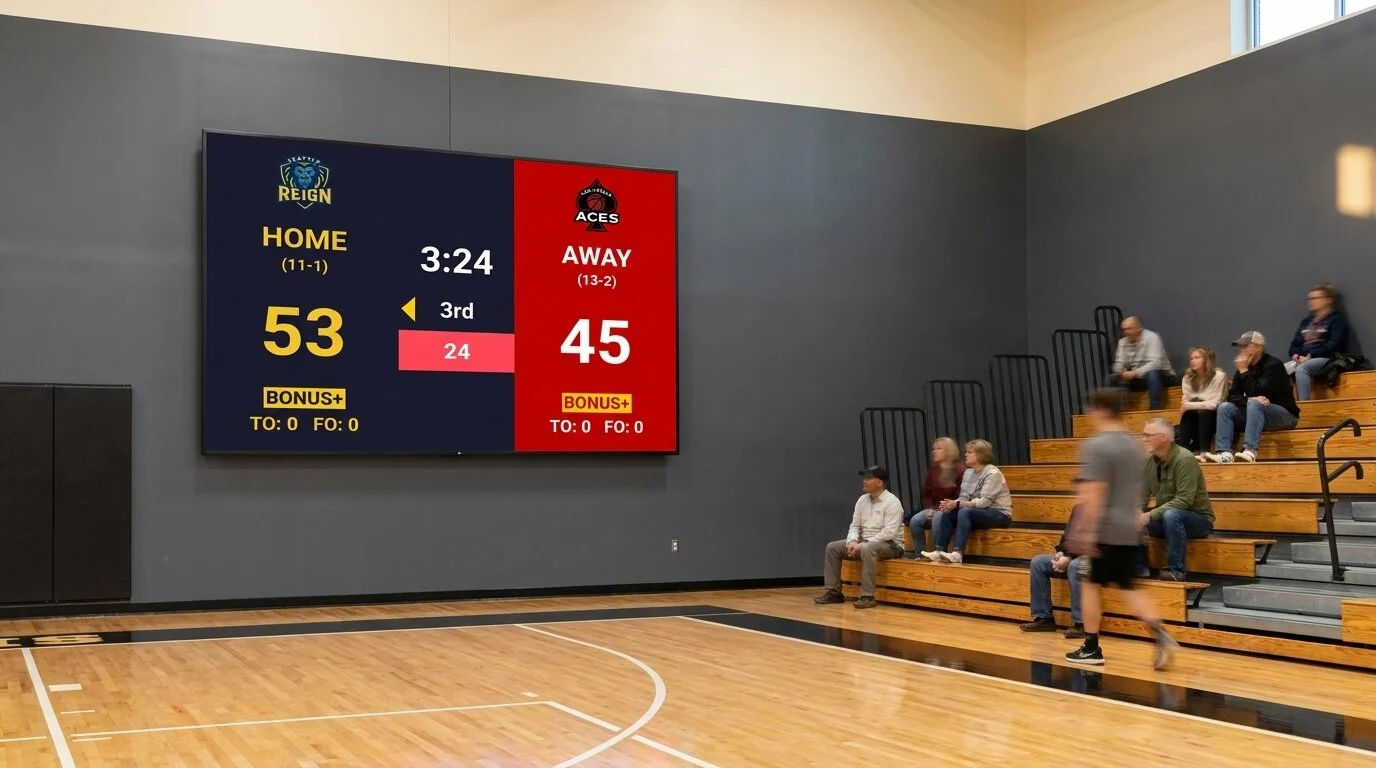
Selecting an electronic sports scoreboard for a school, indoor sports hall, or multi-sport venue isn’t just a case of comparing screen size and price. A scoreboard is suitable for a facility if it is visible, has sport-specific features, is easy to operate, and can be maintained over the long term. Understanding these factors helps buyers select a dependable option for players, officials, teachers, and spectators.
1. Not All Electronic Scoreboards Display the Same Information
Various sports have different scoring systems, so an electronic scoreboard should show the information needed for each game. Basketball usually requires scores, game time, period indicators, and team fouls. Volleyball needs points and set scores, while futsal and handball generally require match time, team scores, and period information. These differences affect the scoreboard layout and the controls used to update it.
When comparing Pixelcom and its range of electronic scoreboards, buyers should consider the sports they regularly host and whether the available displays meet those needs. For example, a school that primarily holds volleyball matches can benefit from a model with separate set and point indicators. Multi-sport facilities should review the available configurations before buying. The relevant scoreboard information can help buyers understand which features are appropriate for their intended use.
2. Brightness and Contrast: Still Important Indoors
In indoor facilities, lighting conditions range from well-lit sports halls to multipurpose rooms with uneven lighting. A scoreboard that looks legible in a showroom may not be readable from the stands or the far side of a large gymnasium. Therefore, brightness, contrast, digit clarity, and viewing angles are important factors to consider.
Buyers should assess the display under lighting conditions similar to those in the intended venue. Scores are easier to distinguish when there is good contrast between the illuminated digits and the background, especially during fast-paced matches. Consider visibility from different parts of the stands, ensuring spectators can read the numbers without straining.
3. Digit Size and Viewing Distance
One of the most important factors when choosing an electronic sports scoreboard is the size of its numbers. A small display might work for a school gym, but the same model could be difficult to read in a larger sports hall where spectators sit farther away.
Measure the approximate distance between the scoreboard and the farthest regular viewing position before buying a unit. Consider the mounting angle and height as well, because obstructions and poor placement can reduce visibility. If possible, ask suppliers for advice on suitable digit sizes for the venue. This practical assessment is more useful than choosing a screen based on appearance alone.
4. Controls Should Be Easy for Volunteers and Teachers
In schools and community sports venues, scoreboards are often operated by teachers, coaches, volunteers, or staff members who may not have technical training. Complex controls can cause delays, incorrect scores, and unnecessary interruptions during games. When evaluating a range of electronic scoreboards, buyers should consider how easily different users can operate each model.
The control system should be user-friendly and make common tasks straightforward, including changing scores, adjusting the game clock, and switching periods or sets. Clear labels, organised menus, and accessible instructions can help minimise operating errors. Before buying, ask for a demonstration and make sure the controls are convenient for the people who will use them most often. Exploring a range of electronic scoreboards can also help buyers compare control options and identify a suitable solution for their venue.
5. Maintenance and Technical Support Matter
Since an electronic scoreboard is a long-term investment, buyers should look beyond its initial performance. Like other electronic equipment, it may eventually require troubleshooting, component replacement, software updates, or repairs.
Enquire about warranty coverage, maintenance arrangements, spare-part availability, and the process for obtaining technical assistance. You may also want to clarify whether support is available remotely or requires an on-site visit. Reliable support can help a school or sports club resolve problems quickly and minimise disruption to scheduled events.
6. One Venue, Many Sports: Avoid the Universal Model
A multisport venue might host basketball, volleyball, futsal, and handball throughout the week. Although a single scoreboard can support multiple sports, a generic model may not always be the best choice. Some displays may not provide convenient access to particular scoring functions or may not present sport-specific information as clearly as required.
When choosing Pixelcom scoreboard options, compare the features needed for every sport played at the venue. A purpose-built model can provide a more practical layout for a facility focused on one dominant sport. Schools hosting different activities might benefit from a suitable multisport configuration. Before committing, review the available scoreboard options and confirm the supported functions with the supplier.
7. Total Cost Goes Beyond the Screen
The total cost of buying an electronic sports scoreboard involves more than the purchase price. Installation, mounting equipment, electrical work, operator training, maintenance, and future upgrades can also affect the budget. Requirements vary depending on the building, scoreboard design, and existing infrastructure.
Ask suppliers to explain what is included in the quotation and which items may involve additional charges. Consider future needs, too. Adding another sport or expanding seating might eventually require different display capabilities. Understanding the total cost of ownership helps decision-makers avoid unexpected expenses and choose equipment that remains useful over the long term.
In Brief
Choosing an electronic sports scoreboard requires balancing sport-specific functionality, visibility, ease of operation, technical support, and total ownership costs. For schools, indoor sports halls, and multisport venues, considering these seven factors before buying can support a more practical and dependable investment. Good planning also helps players, officials, and spectators follow each match clearly.
