

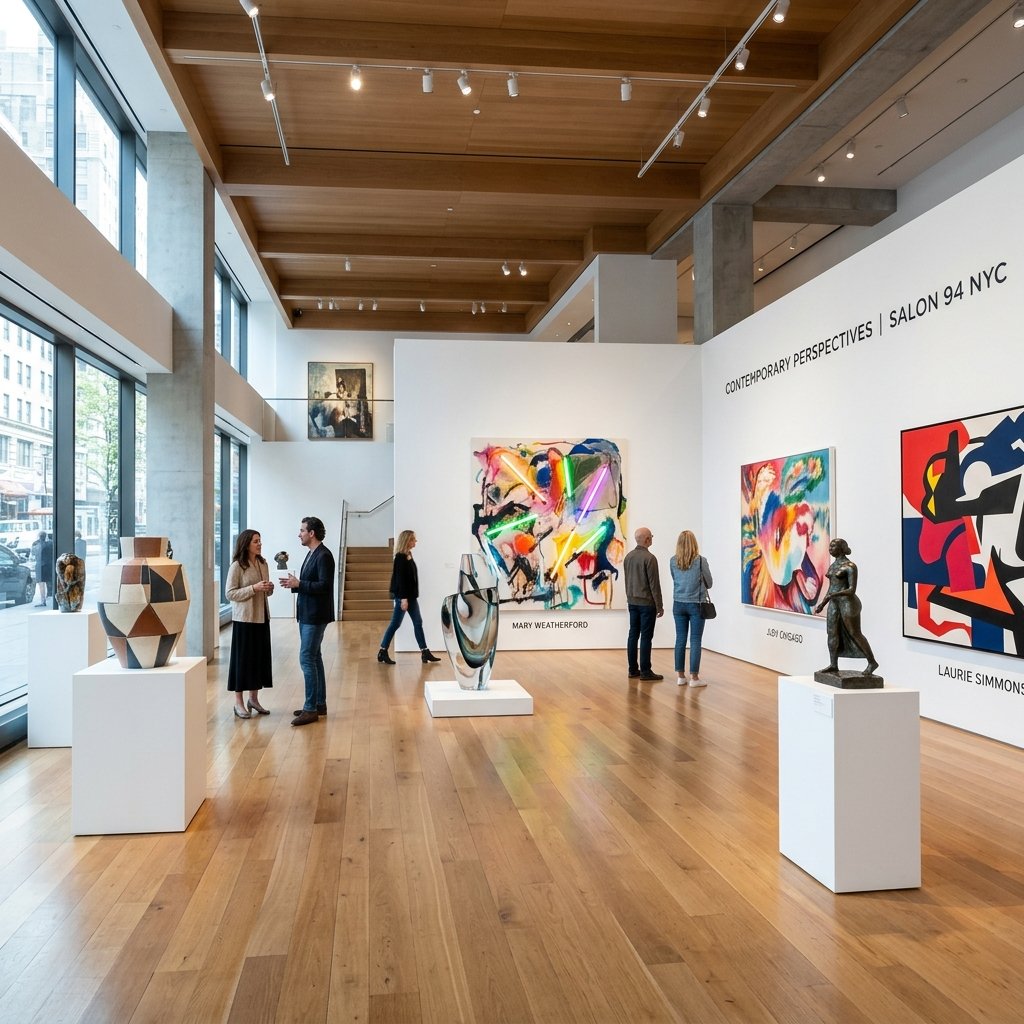
The contemporary art landscape in New York City has long been shaped by pioneering galleries that challenge conventional exhibition formats and champion transformative visual creators. At the forefront of this movement, salon 94 artists have redefined how modern painting, ceramics, sculpture, and design interact with global audiences and cultural institutions.
Founded by visionary curator and dealer Jeanne Greenberg Rohatyn, Salon 94 emerged as a dynamic cultural hub on Manhattan’s Upper East Side. What began as an intimate gallery concept in a private brownstone evolved into an influential international arts destination representing some of the most compelling voices in contemporary visual culture.
In this comprehensive guide, we explore the groundbreaking roster of creators championed by the gallery, their influential museum exhibitions, and the lasting impact these artists continue to make across the global art landscape.
Table of Contents
Understanding the Legacy of Salon 94 Artists in Modern Art
The emergence of salon 94 artists marked a significant paradigm shift in how contemporary galleries cultivate artistic talent. Established in 2002 on East 94th Street, the gallery dissolved traditional boundaries between residential domestic spaces and commercial exhibition rooms.
This unique architectural setting invited viewers to engage with contemporary works in an intimate environment. Artists were encouraged to produce ambitious installations that responded directly to human scale, domestic living, and historical surroundings.
Over two decades, the gallery expanded its footprint to the Bowery and eventually consolidated into a landmark mansion on Manhattan’s East 89th Street. Throughout this architectural expansion, the core mission remained unchanged: supporting fearless creators whose work interrogates identity, body politics, material craft, and social commentary.
By integrating fine art with contemporary design, functional objects, and architectural elements, the gallery established a multifaceted platform. Artists working in ceramics, textiles, and non-traditional media gained equal stature alongside master painters and sculptors.
Today, the gallery’s legacy lives on through ongoing museum retrospectives, public art commissions, and international biennials. The creative spirit forged by these artists continues to influence new generations of contemporary curators and art collectors worldwide.
Key Artists Represented by Salon 94 and Their Iconic Works
The roster of creators associated with the gallery reflects exceptional diversity, rigorous technical mastery, and groundbreaking conceptual depth. These visionaries span multiple generations, media, and artistic traditions.
Marilyn Minter stands as one of the most prominent figures represented by the gallery. Her hyperrealistic paintings and provocative video installations explore themes of glamour, beauty, body politics, and media consumption. Minter’s work challenges societal standards through lush, photorealistic textures of water droplets, enamel, and human features.
Wangechi Mutu brought transformative collages, sculptures, and video performances into global prominence through gallery showcases. Her work fuses mythology, feminist narrative, and African history, utilizing materials such as tea, soil, synthetic pearls, and found objects to construct arresting figurative forms.
Huma Bhabha creates haunting, visceral sculptures using wood, styrofoam, clay, and cast bronze. Her figures evoke ancient civilizations, futuristic science fiction, and post-apocalyptic landscapes, earning widespread acclaim across international art institutions.
Judy Chicago, a pioneer of feminist art, partnered with the gallery to showcase vital historical works alongside contemporary projects. Her groundbreaking work in ceramics, textiles, and pyrotechnic smoke performances continues to inspire contemporary feminist dialogue.
Laurie Simmons utilizes staged photography, miniature figurines, and dollhouse interiors to critique gender roles and domestic expectations. Her staged compositions serve as powerful psychological studies of postwar suburban life and modern identity.
Emerging contemporary voices like Kwesi Botchway have also expanded the gallery’s portraiture tradition. Botchway’s vibrant figurative paintings feature rich purple tones and nuanced skin textures, celebrating Black identity and contemporary African portraiture on an international stage.
For galleries and creative enterprises seeking to build lasting artistic careers, implementing tailored guidance similar to strategic creative development insights can unlock sustainable growth in the global art ecosystem.
Exhibition Dynamics and Curation at Salon 94 Gallery
Curation at Salon 94 has always prioritized immersive storytelling and intellectual rigor. Rather than presenting isolated art objects, exhibitions are meticulously designed to transform gallery architecture into experiential environments.
Solo exhibitions frequently featured site-specific installations, custom wall coverings, and spatial interventions. Curators worked closely with creators to turn gallery rooms into evocative environments that engaged every visual and sensory dimension.
Group exhibitions brought disparate artistic disciplines into dialogue. A contemporary ceramic vessel by Ruby Neri might sit alongside a figurative painting by Lyle Ashton Harris or a sculpture by Thomas Houseago, highlighting cross-disciplinary resonances.
Furthermore, the gallery consistently published scholarly exhibition catalogues and monographs. These publications provided critical contextual essays, artist interviews, and archival documentation that documented the development of salon 94 artists for academic institutions and private collections.
By blending commercial gallery operations with museum-grade scholarship, the gallery elevated the cultural visibility of every featured exhibition, setting high standards for contemporary gallery curation.
The Cultural Impact of Salon 94 Artists on the Global Art Market
The institutional recognition achieved by these creators has significantly impacted major museum collections and international art fairs. Works originated at gallery exhibitions are regularly acquired by prestigious institutions such as The Metropolitan Museum of Art, the Museum of Modern Art (MoMA), and the Whitney Museum of American Art.
In the primary and secondary art markets, demand for these works has shown remarkable resilience and growth. Collectors value the rigorous provenance, museum-grade curation, and historical importance associated with artists from the gallery roster.
Key market factors contributing to their enduring value include:
- Institutional Presence: Consistent inclusion in major museum retrospectives, international biennials, and public monument commissions.
- Cross-Disciplinary Appeal: Recognition across fine art, studio craft, architectural design, and high-fashion collaborations.
- Academic Scholarship: Extensive documentation through monographs, critical reviews, and art historical essays.
- Monumental Commissions: Large-scale public installations that enhance artist visibility in urban spaces.
This multi-layered support network ensures that salon 94 artists remain pivotal figures in art market discussions and scholarly art history curriculums worldwide.
How to Experience Salon 94 Artists and Future Gallery Shows
Experiencing the work of salon 94 artists offers valuable inspiration for art enthusiasts, seasoned collectors, and student researchers alike. Although gallery operations evolve over time, the artistic output of this roster remains widely accessible across public and private spaces.
To engage deeply with these artworks, consider the following avenues:
- Museum Exhibitions: Visit permanent collections and traveling exhibitions at major cultural institutions around the world.
- Art Fairs & Biennials: Track solo and group presentations at international fairs such as Art Basel, Frieze New York, and the Venice Biennale.
- Gallery Archives & Catalogues: Explore digital archives, exhibition catalogues, and documentary films focusing on gallery roster highlights.
- Public Art Installations: Seek out public sculptures and architectural commissions permanently installed in civic spaces across major cities.
By exploring these public and institutional collections, art lovers can appreciate how salon 94 artists continue to shape modern visual discourse and aesthetic innovation.
Frequently Asked Questions
Who founded Salon 94 gallery in New York?
Salon 94 was founded in 2002 by art dealer and curator Jeanne Greenberg Rohatyn. Originally located in her East 94th Street townhouse, the gallery grew into an influential contemporary art destination operating across multiple Manhattan locations before consolidating on 89th Street.
Which famous contemporary creators are associated with Salon 94 artists?
The roster of famous salon 94 artists includes Marilyn Minter, Wangechi Mutu, Huma Bhabha, Judy Chicago, Laurie Simmons, Kwesi Botchway, Lyle Ashton Harris, and Thomas Houseago, among many other internationally acclaimed painters, sculptors, and multimedia creators.
What medium of art does Salon 94 specialize in?
Salon 94 specialized in a broad range of contemporary art disciplines, including hyperrealistic painting, figurative ceramics, feminist photography, monumental bronze sculpture, textiles, and functional design objects, bridging fine art and decorative craft seamlessly.
Where are artworks by gallery artists currently displayed?
Artworks by gallery artists are featured in major permanent museum collections globally, including the Metropolitan Museum of Art, MoMA, the Whitney Museum, the Tate Modern, and the Centre Pompidou, as well as prominent private collections.
How did Salon 94 influence contemporary art gallery spaces?
Salon 94 pioneered the integration of fine art into intimate, residential architecture, blurring the boundaries between domestic living and commercial gallery displays while championing diverse, multidisciplinary voices early in their careers.
Conclusion
The ongoing narrative of salon 94 artists highlights the power of visionary curation, fearless artistic expression, and institutional dedication. By fostering environment where painters, sculptors, ceramists, and designers could flourish alongside one another, the gallery established a blueprint for contemporary art spaces.
Whether through Marilyn Minter’s provocative realism, Wangechi Mutu’s mythic collages, or Judy Chicago’s historic feminist installations, the creators championed by the gallery continue to influence global culture. Their works inspire audiences, provoke critical thought, and enrich museum collections across the world.
As contemporary art continues to evolve, the impact of these groundbreaking creators will remain a touchstone for artistic excellence and creative innovation for generations to come.
