

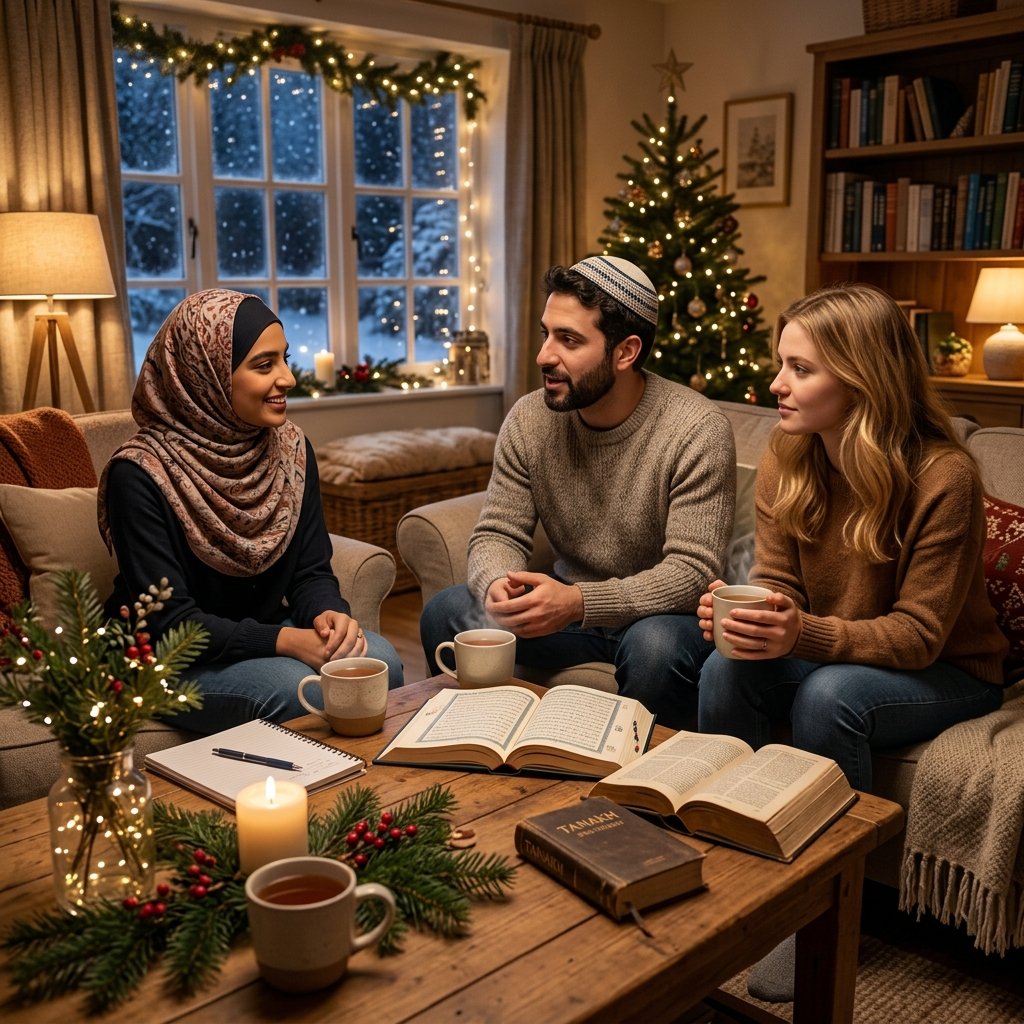
Every winter, as twinkling lights, decorated trees, and holiday music fill shopping centers worldwide, millions of people ask: do muslims celebrate christmas? With over 1.9 billion Muslims across the globe, understanding how Islamic traditions intersect with winter holidays is an essential part of global cultural literacy and interfaith dialogue.
While Christmas is widely observed as both a major Christian religious holiday and a global commercial festive season, Islamic teachings offer a distinct theological perspective. Many people wonder whether Muslims celebrate Christmas in secular ways, how Islamic beliefs view Jesus, or what holidays Muslims celebrate instead. The answer involves core theological doctrines, rich cultural practices, and diverse geographical contexts.
In this comprehensive guide, we address whether do muslims celebrate christmas, why most Muslims refrain from observing it religiously, what holy days they celebrate instead, and how Muslim communities interact with winter festive traditions worldwide.
Table of Contents
Do Muslims Celebrate Christmas? (Quick Answer)
When asking do muslims celebrate christmas yes or no, the concise theological answer is: religiously, no. Practicing Muslims do not celebrate Christmas as a holy day, liturgical event, or religious holiday. Mainstream Islamic scholarship holds that adopting non-Islamic religious observances is impermissible in Islamic law (Sharia).
However, understanding this question fully requires recognizing the essential distinction between religious doctrine and social interaction. While Muslims do not celebrate Christmas religiously, many Muslims participate socially or culturally by enjoying corporate time off, visiting interfaith relatives, or attending workplace seasonal luncheons.
To understand why Muslims do not observe Christmas, one must look at core Islamic tenets. Examining this topic helps clarify how Muslims revere Jesus (known as Prophet Isa in Islam) as an honored messenger of God while holding distinct beliefs regarding his divine nature and holiday celebrations.
Why Don’t Most Muslims Celebrate Christmas?
Understanding why most Muslims do not celebrate Christmas requires examining Islamic theology regarding the nature of God, prophethood, and religious innovation. The central pillar of Islamic faith is strict monotheism, known as Tawheed.
In Islam, Jesus (Isa ibn Maryam) is revered as one of the most prominent prophets and messengers of God. The Quran dedicates an entire chapter to his mother Mary (Surah Maryam) and details his miraculous virgin birth, his miracles, and his divine revelation (the Injeel). However, Islam strictly teaches that Jesus is a mortal human prophet, not the Son of God.
Because traditional Christian theology views Christmas as the celebration of the birth of the Son of God, mainstream Islamic scholars agree that observing Christmas religiously conflicts with Islamic monotheism. Additionally, Islamic tradition discourages inventing or adopting new religious holidays (known as Bid’ah in liturgical matters), emphasizing that God has already prescribed specific holy days for Muslims.
What Do Muslims Celebrate Instead of Christmas?
People often ask what Muslims celebrate instead of Christmas when researching major world holidays. In Islamic tradition, there are two primary annual holy celebrations ordained directly by religious scripture and prophetic tradition.
1. Eid al-Fitr (Festival of Breaking the Fast)
Eid al-Fitr marks the joyous conclusion of Ramadan, the holy month of fasting. On this morning, Muslims dress in fine clothes, gather for congregational Eid prayers, exchange warm greetings (“Eid Mubarak”), give gifts to children, and enjoy elaborate celebratory meals with family and friends. Philanthropy is mandatory through Zakat al-Fitr, ensuring that underprivileged members of the community can also celebrate.
2. Eid al-Adha (Festival of Sacrifice)
Eid al-Adha occurs during the twelfth month of the Islamic lunar calendar, coinciding with the completion of the annual Hajj pilgrimage to Mecca. This holiday honors the profound devotion of Prophet Ibrahim (Abraham) and his willingness to obey God’s command. Families perform a ritual sacrifice (Qurbani) and distribute a significant portion of the meat to the poor, neighbors, and extended family.
Additionally, depending on regional traditions, many Muslims observe the Islamic New Year (1st of Muharram) and Mawlid al-Nabi (the birth of Prophet Muhammad) through spiritual reflection, community gatherings, and charity.
What Do Muslims Celebrate Around Christmas Time?
Many wonder what Muslims celebrate around Christmas time when December arrives. Because the Islamic calendar (Hijri) is strictly lunar—operating on a 354 or 355-day cycle—Islamic holidays shift approximately 10 to 11 days earlier each solar year.
Consequently, there is no fixed Islamic holiday tied to December 25th or the solar winter season. Depending on the year, major Islamic occasions such as Ramadan, Eid al-Fitr, or Eid al-Adha may occur during winter months or fall in mid-summer. Any calendar overlap between an Islamic holiday and Christmas is purely astronomical coincidence rather than a intentional alignment.
During the winter season, Muslims in Western countries primarily appreciate the official corporate and school holidays for personal rest, family reunions, and attending annual educational Islamic conventions held across major cities.
Do Some Muslims Celebrate Christmas?
In modern multicultural societies, asking do muslims celebrate christmas yields varied social answers depending on family background, cultural environment, and personal religious observance.
Some Muslims choose to engage in secular Christmas traditions such as erecting a holiday tree, exchanging gifts, or hosting festive family dinners. Key factors influencing this participation include:
- Interfaith Families: Households where one spouse or extended relative is Christian often participate in family Christmas dinners to honor kinship and show love to non-Muslim relatives.
- Secular Festivities: In Western nations, Christmas has developed a strong secular commercial aspect focused on Santa Claus, winter imagery, and gift-giving, which some families enjoy socially without religious intent.
- Workplace & School Integration: Attending holiday office parties or participating in secret Santa exchanges to foster camaraderie with coworkers and classmates.
Demographic research conducted by the Pew Research Center highlights how interfaith and multicultural households balance diverse holiday traditions while respecting individual religious boundaries.
Do Muslims Celebrate Christmas in Different Countries?
Geographical and cultural environments play a major role in shaping how Muslims interact with the holiday season. Asking how do muslims celebrate christmas across different global regions highlights fascinating cultural nuances.
United States
In the United States, American Muslims navigate a dominant commercial holiday environment. While practicing Muslims do not attend Christian church services, many take advantage of winter sales, visit family during corporate shutdowns, and organize charitable winter coat drives for local shelters. Large-scale annual Islamic conventions, such as MAS-ICNA in Chicago, draw tens of thousands of Muslim attendees every December.
United Kingdom
In the United Kingdom, British Muslims enjoy the official public bank holidays. Many participate in office gift exchanges or school holiday events while maintaining distinct Islamic practices. UK Muslim charities actively organize food drives and homeless assistance programs throughout December.
For more insights on diverse lifestyle traditions and cultural practices, explore our comprehensive guide on contemporary biography and culture trends.
Middle East
Across the Middle East, historical co-existence between Muslims and indigenous Christian communities shapes seasonal atmosphere. In metropolitan centers like Beirut, Dubai, Abu Dhabi, and Amman, luxury shopping malls feature elaborate Christmas displays out of respect for local Christian populations and international tourists.
Egypt
Egypt is home to a significant Coptic Christian population. Coptic Christians observe Christmas on January 7th according to the Julian calendar. The Egyptian government recognizes January 7th as an official national public holiday, and Egyptian Muslims frequently extend warm greetings to their Coptic neighbors.
Palestine
In Palestine, historic cities like Bethlehem (the birthplace of Jesus) and Nazareth feature civic Christmas tree lightings. Palestinian Muslims and Christians routinely attend public civic ceremonies together as a sign of national solidarity and shared cultural heritage.
Albania
Albania boasts one of the world’s most renowned models of religious harmony. Albanian Muslims, Orthodox Christians, and Catholics routinely attend each other’s religious holiday feasts and share festive meals without conflict.
Do Muslims Celebrate Christmas Based on Islamic Traditions?
When examining Islamic jurisprudence (Fiqh), people wonder if opinions on do muslims celebrate christmas vary between major Islamic schools of thought.
Sunni Muslims
Among Sunni scholars—across Hanafi, Shafi’i, Maliki, and Hanbali schools—there is consensus that adopting non-Islamic religious rituals or celebrating Christmas as a theological holy day is spiritually impermissible. However, jurists emphasize that showing kindness, exchanging courteous greetings, and maintaining good neighborly relations with Christians is a religious duty.
Shia Muslims
Shia scholars hold similar theological views, affirming that liturgical Christmas observances belong strictly to Christian theology. At the same time, prominent Shia leaders in Lebanon, Iraq, and Iran encourage respectful civic engagement and honoring Jesus as a holy prophet of Islam.
Do Muslim Countries Celebrate Christmas?
Travelers often ask whether Muslim-majority countries celebrate Christmas when visiting the Middle East, North Africa, or Asia in December.
A distinction must be drawn between state-level religious endorsement and public civic recognition. In Muslim-majority nations with native Christian populations—such as Egypt, Lebanon, Jordan, Syria, Iraq, and Malaysia—Christmas Day is officially recognized as a statutory public holiday.
In global commercial centers like the United United Arab Emirates (Dubai), Turkey (Istanbul), and Indonesia (Jakarta), commercial centers display festive trees and seasonal lights to accommodate international expatriates and tourists, reflecting civic hospitality rather than state adoption of Christian theology.
Do Muslims Celebrate Christmas Along With Other Holidays?
People frequently inquire how Muslims approach Western calendar holidays alongside traditional Islamic observances.
Christmas and Easter carry specific Christian theological meanings regarding the divinity, crucifixion, and resurrection of Jesus, which Muslims do not observe religiously. Conversely, many Western Muslims view Thanksgiving as a secular cultural holiday focused on gratitude, family reunions, and halal dining.
Similarly, while secular New Year celebrations (January 1st) and personal birthdays are widely marked socially by many Muslims, Christmas remains distinct due to its explicit religious roots.
Do Muslims Celebrate Christmas Day, Christmas Eve or the Christmas Season?
Specific calendar dates often prompt detailed questions regarding how do muslims celebrate christmas.
Neither Christmas Eve (December 24th) nor Christmas Day (December 25th) holds any religious standing in Islamic liturgy. Muslims do not attend Christmas Eve mass or participate in Christian holiday prayer services.
However, Muslims in Western countries appreciate the broader winter holiday season as a convenient period for rest, family gatherings, travel, and personal hobbies during corporate and academic shutdowns.
How Do Muslims Celebrate Christmas?
When exploring how do muslims celebrate christmas, it is essential to emphasize that practicing Muslims do not celebrate it as a religious holy day. However, in social and community contexts, Muslims interact with the season in several positive ways:
- Kinship & Family Ties: Spending quality time with non-Muslim relatives and interfaith family members during annual work holidays.
- Community Service & Charity: Organizing winter coat drives, distributing warm meals to the homeless, and volunteering at local charities during December.
- Workplace & Academic Events: Exchanging seasonal gifts or attending non-religious office holiday lunches to build positive relationships with colleagues.
- Winter Rest & Travel: Utilizing academic and corporate winter breaks to travel, pursue personal interests, and spend time with loved ones.
Frequently Asked Questions
When do Muslims celebrate Christmas?
Muslims do not celebrate Christmas on any date. While Christians observe Christmas on December 25th (or January 7th in Eastern Orthodox churches), Islam does not include Christmas in its religious calendar.
What day do Muslims celebrate Christmas?
Muslims do not celebrate Christmas day. The main religious holidays in Islam are Eid al-Fitr and Eid al-Adha, which follow the Islamic lunar calendar rather than fixed solar dates.
Do Muslim families and children celebrate Christmas?
Most Muslim families do not celebrate Christmas at home. However, Muslim children growing up in Western nations often learn about holiday traditions in school and enjoy general winter festivities with classmates.
Do Muslims celebrate Christmas in Islam?
In Islam, Christmas is not a recognized religious holiday. While Muslims honor Jesus (Prophet Isa) as a noble messenger of God, Islamic teachings prohibit adopting non-Islamic religious celebrations.
What do Muslims celebrate instead of Christmas?
Muslims celebrate Eid al-Fitr (marking the end of Ramadan) and Eid al-Adha (the Festival of Sacrifice) as their two official annual holy celebrations, featuring special prayers, feasts, and charitable giving.
Conclusion
In summary, when asking do muslims celebrate christmas, the clear theological answer is no. Most Muslims do not observe Christmas as a religious holiday because Islamic doctrine emphasizes strict monotheism and distinct holy celebrations ordained by God.
At the same time, Muslims hold profound respect for Prophet Jesus (Isa) and his mother Mary (Maryam). In multicultural societies, many Muslims engage respectfully with neighbors, coworkers, and interfaith family members during the winter season while remaining faithful to their core Islamic beliefs.
